
One Toy Design. Two Elastomers. Very Different Trade-Offs.
For pet brands developing a new dog chew toy, choosing between natural rubber and silicone is not simply a question of which material is “safer” or “more durable.” It depends on the toy’s geometry, intended play pattern, cleaning needs, target price, and the way each material performs after molding.
At NEWTOP SILICONE, material selection is part of a broader OEM development discussion: what the dog will do with the product, which features are most likely to fail, and what should be verified before production.

Natural rubber is often the better starting point for dedicated, high-chew designs that need resilience and tear resistance. Silicone is often attractive for easy-clean enrichment products, intricate molded details and repeated washing. Neither material is indestructible, and performance must be validated on the finished design—not inferred from material name alone.
1. Natural Rubber vs Silicone: What Matters in Development?
Both materials are elastomers, but they have different chemical backbones and are processed with different compound formulations. The formulation and final shape matter just as much as the material category. A high-tear silicone grade may outperform a poorly formulated rubber grade in a particular product, while a well-designed natural rubber toy may withstand repeated biting better than a thin silicone equivalent.
| Design factor | Natural rubber | Silicone rubber |
|---|---|---|
| Typical strength | High resilience and often strong tear / abrasion performance in suitable compounds | Excellent flexibility and aging resistance; tear performance depends strongly on grade and geometry |
| Repeated chewing | Often preferred for dedicated chew products after bite and tear testing | Can work for lighter chewing and reinforced enrichment shapes; thin edges need scrutiny |
| Heat and weathering | Can age with heat, ozone and UV exposure unless protected by formulation | Generally maintains properties well across a wide temperature range |
| Cleaning | Washability depends on the finished compound and care instructions | Often easier to specify for repeated washing; validate cleaning conditions on finished parts |
| Texture & color | Grippy, elastic feel; color and odor controlled through compounding | Good color possibilities and detailed surface replication |
| Latex consideration | Derived from natural latex; evaluate relevant sensitization and disclosure risks | Does not inherently contain natural rubber latex proteins |
| Costs | Depends on compound, weight, tooling yield and processing | Depends on silicone grade, weight, tooling, curing and secondary processing |
Do not use Shore A hardness alone to predict durability. Hardness describes indentation resistance, not puncture resistance or service life. For the technical background, see our guide to Shore hardness for pet toys.
2. Match the Material to the Toy's Real Use
A practical sourcing decision starts by defining what the toy is expected to do. A chew stick, a treat-dispensing ball and a food-licking mat do not experience the same forces.
Start with: suitable natural rubber compounds. Prioritize tear growth, puncture resistance, wall transitions and fragment risk during destructive testing.
Compare both: natural rubber may offer resilience for biting and bouncing; silicone can support washable features. Test opening size and flex fatigue.
Consider silicone: fine molded patterns, flexibility and routine cleaning can be useful. These are feeding tools, not substitutes for heavy-duty chew toys.

Why intended use changes the material decision
A thin ridge that performs well during licking may be vulnerable when a dog pulls it sideways with its teeth. A thick rubber ring may resist chewing yet be less appropriate when the goal is a lightweight, highly detailed feeding accessory.
Explore NEWTOP's custom pet toy manufacturing range for chew, treat-dispensing and enrichment formats.
3. Design Geometry Before Locking the Material
Weak points in chew toys are frequently created by geometry. Choosing a stronger polymer cannot reliably compensate for an exposed, thin section or a sharp notch.
Check the thinnest regions, not merely average wall thickness. Hollow shapes need enough structure to resist localized bites and compression.
Use smooth transitions. Narrow slits, sharp internal corners and treat openings can concentrate stress and initiate tearing.
Control flash, seams and raised details. Confirm that textured features remain attached after repeated bending and biting.
Natural rubber toys are commonly produced through vulcanizing molding processes suited to the compound and geometry. Silicone products may use compression molding or liquid silicone rubber (LSR) injection molding. The tooling decision depends on detail, part volume, dimensional needs and total project cost; it is not dictated by material marketing labels alone.
For OEM development, NEWTOP can review drawings, tooling options, colors and samples before a production specification is finalized. Our custom silicone product service describes the design, molding and packaging workflow.
4. A Prototype Test Plan for Pet Brands
Testing a flat specimen is useful for selecting a compound, but it cannot replace evaluation of the molded toy. A production-ready program should use both material-level and product-level checks, with acceptance criteria agreed before tooling approval.
Confirm polymer type, formulation or grade, colorants, applicable chemical screening, and any natural-latex-related considerations.
Compare durometer, tensile strength, elongation and tear strength where useful, for example using relevant ASTM D2240, D412 and D624 methods.
Use a documented fixture or protocol appropriate to the toy. Track crack initiation, detached pieces, deformation and performance after cycles.
Check performance after the actual claimed washing process and after expected storage, heat, UV or humidity exposure.
Inspect weak sections, flash, surface defects, dimensions, weight and color against an approved sample.
Match toy size and intended chewing style to the target dog. Provide supervision, inspection and replacement instructions.
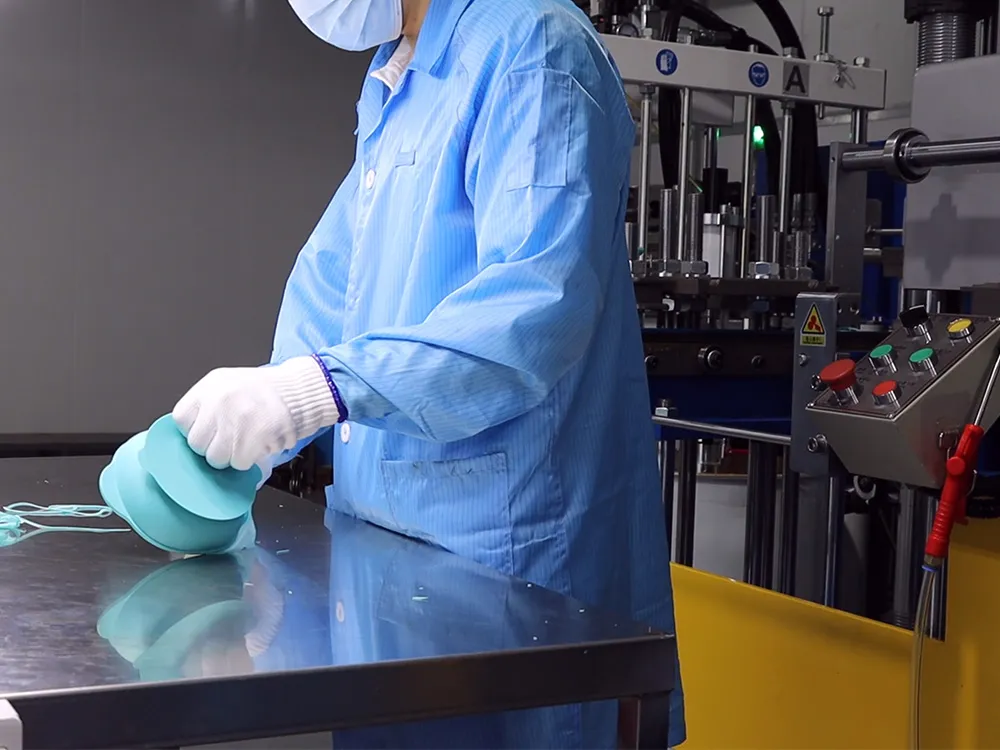
Set acceptance limits before mass production
A helpful specification defines the intended use, permitted cosmetic defects, critical dimensions, compound or material grade, sample approval procedure, test method and pass/fail limits.
“Durable” is not a measurable acceptance criterion. A specified test condition and observable failure threshold are far more useful for repeat orders.
5. Which Material Should Your Brand Choose?
Use the following starting framework during a product development review. The recommendation should be confirmed with prototype results.
| Project priority | Suggested starting material | What to verify first |
|---|---|---|
| Dedicated chewing / repeated biting | Natural rubber | Tear propagation, fragments, tooth-friendly flexibility |
| Fine-pattern enrichment & frequent washing | Silicone | Ridge strength, cleaning compatibility, chew misuse |
| Chew + treat dispensing + bounce | Compare both | Opening durability, resilience, wall thickness, product cost |
| Latex avoidance requirement | Silicone may be preferable | Complete formulation, supplier documentation, product validation |
| Lowest feasible landed cost | Quote both designs | Part weight, cavities, cycle time, scrap, packaging, testing |
Cost should be assessed at the finished and tested product level. Mold complexity, material usage, rejects, secondary operations and packaging can outweigh a simple per-kilogram raw material comparison. Avoid quoting a universal “silicone costs more” rule without a specific design and volume.
For a deeper look at natural rubber sourcing and odor considerations, read Natural Rubber Pet Chew Toys: Sourcing, Smell Control, and Safety Testing. That article covers supplier and material controls; this guide focuses on engineering trade-offs before a toy goes into tooling.
6. What NEWTOP Needs for an Accurate OEM Evaluation
You do not need a complete technical drawing to start. However, sharing a few decisions early helps a manufacturer propose a useful material and design direction:
- Product type: chew ring, bone, ball, treat dispenser, lick mat or another design.
- Intended dog profile: breed/size category, chewing intensity, supervised play and expected use.
- Visual and structural requirements: dimensions, weight, wall sections, openings, texture, colors and branding.
- Material expectations: natural rubber, silicone, latex avoidance or other relevant constraints.
- Target market: where the product will be sold, claims to support and relevant testing requirements.
- Commercial details: sample quantity, estimated annual volume, packaging format and target launch window.
Frequently Asked Questions
Is natural rubber always more durable than silicone for dog chew toys?
No. Natural rubber often has advantages for dedicated chewing applications, but actual durability depends on grade, formulation, thickness, design and the bite conditions. Prototype testing is needed.
Can silicone be used for dog chew toys?
Yes, for designs suited to its mechanical properties. Silicone is commonly useful for enrichment and treat-related products, but heavy-chew claims need tear, bite and fragment-risk validation.
Does a higher Shore A rating mean a safer chew toy?
No. Higher hardness does not automatically mean better tear resistance or dental safety. The product must balance flexibility, puncture resistance and risk of detached pieces.
Can the same mold be used for natural rubber and silicone?
Not necessarily. The materials can require different curing, flow, shrinkage, demolding and venting conditions. Engineering review is required before assuming tooling compatibility.
Are silicone or natural rubber dog toys FDA certified?
“FDA certified dog toy” is not a blanket product approval category. Any material or safety claim should identify the applicable requirement, test method and specific supporting report. Food-contact data alone does not prove a chew toy's bite durability or overall safety.
Need to Choose a Material for Your Next Dog Toy?
Share your target toy design, chewing application, estimated volume and preferred packaging. NEWTOP can discuss suitable material options, design adjustments, sample development and manufacturing feasibility before you commit to tooling.
Discuss Your Pet Toy Project →Technical note: Material behavior described here is comparative guidance, not a claim that all grades behave identically. Actual acceptance limits and chemical requirements depend on the compound, product design and destination market. Supervise dogs during play and replace damaged chew toys.
Hi, I am the author of this article. For the past 10 years or so, we have been dedicated to meeting the custom silicone product needs of our customers from over 50 countries and regions around the world.
If you have any questions, please contact us for a free, no-obligation quote.

